Artificial intelligence will magnify existing conditions in Latin American schools rather than fix them, and teachers, not technology, will determine the outcome. “The Impacts of AI in Education,” a webinar...
In October 2015, I published a column in Spanish that tried to answer a question I kept hearing across Latin America. If information and communications technologies are so important to...
Some would say that many Latin American public officials entertain a very seductive idea about digital sovereignty: that a law or decree is all it takes to impose it. Yet...
Politics and sports do not mix. That is one of the most repeated and most false assertions in history. From regional games, such as the Central American and Caribbean Games,...
The National Radio Spectrum Program 2026–2030 (PNER), published in the Official Gazette of the Federation (Diario Oficial de la Federación) on May 18, 2026, and jointly issued by the Digital...
The government of President Claudia Sheinbaum altered the institutional and regulatory framework of the telecommunications and information and communications technology (ICT) sector in Mexico. The justification is straightforward: the previous...
When discussing the development of telecommunications in Latin America, the conversation typically centers on the region's largest markets: Argentina, Brazil, Colombia, Chile, Mexico, and Peru. The remaining countries appear in...
Last November 2025, the Global Knowledge Index (GKI) was published, of which I have been a part of the advisory committee since 2021. This publication seeks to establish a comprehensive...
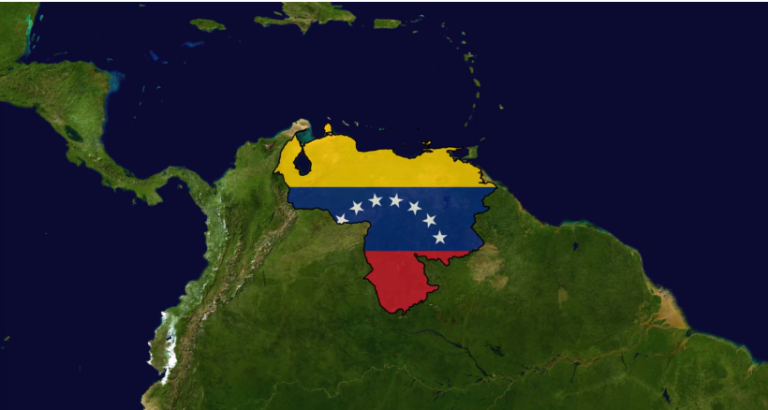
On January 3, U.S. Army forces carried out a military operation to arrest Nicolás Maduro, President of Venezuela. This military action falls within the framework of the United States’ new...
The goal of every government is to improve the quality of life of its citizens; to achieve this, it implements public policies that seek to remedy deficiencies in the supply...